
Blog
Non-surgical kidney stone dissolution

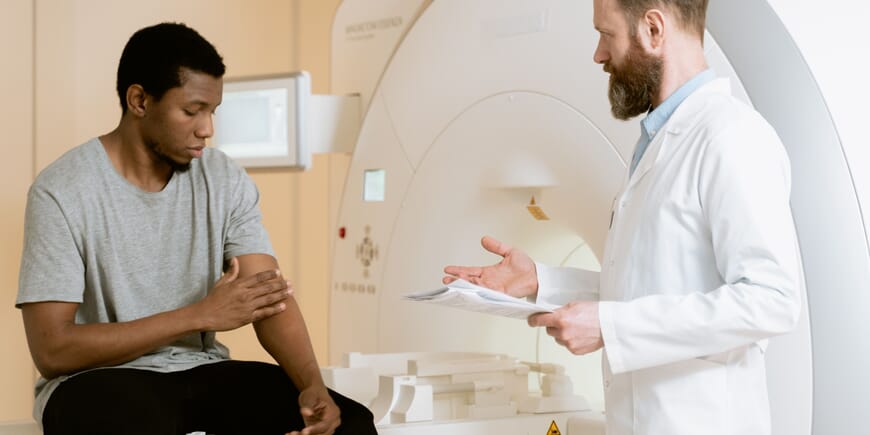
The most frequently asked questions about non-surgical treatment and kidney stone dissolution are related to whether surgery is always necessary, which types of stones can be treated with medication, and how the dissolution process actually works.
In this article, we will try to answer the most common questions patients ask about stone dissolution with medication.
Frequently asked questions about kidney stone dissolution
- Is surgery always necessary to remove kidney stones?
- Which stones can be dissolved non-surgically with medication?
- What medications are used to dissolve kidney stones?
- What do European standards include regarding the non-surgical dissolution of uric acid stones in patients?
Not all kidney stones have the same composition, which means that the methods used to treat them also differ.
Which kidney stones can be dissolved without surgery?
Let us take a closer look at stone removal through non-surgical kidney stone dissolution.
Successful stone dissolution is often perceived as a miraculous cure. In reality, it is simply a matter of understanding the chemistry behind the process.
Three main types of stones can be dissolved:
- Uric acid stones;
- cystine stones;
- struvite stones, also known as infection stones.
The chemical composition of a stone can be determined in a laboratory by submitting the stone for analysis.
Special attention should be paid to uric acid stones, as they occur in approximately one in ten patients with urolithiasis, while the recurrence rate reaches 70% within five years after their complete surgical removal.
Dissolution of uric acid stones
The dissolution of uric acid stones is successful in 85% of cases. This means that 8 out of 10 patients with uric acid stones may be able to avoid surgery.
In general, doctors rarely suggest stone dissolution. One possible reason is that this type of treatment usually takes between one and three months before results are achieved.
This is the amount of time the patient may need to dissolve the stone under the supervision of an experienced doctor.
What is the principle behind dissolving uric acid stones?
The principle behind the dissolution of uric acid stones is based on the mechanism through which they form.
Because uric acid stones are formed in acidic urine, usually at a pH of 5.0–5.5, as can be seen in a urine test, their dissolution occurs when the urine becomes alkaline, usually at a pH of 6.8–7.2.
If the stone density is below 600 and the urine pH is below 5.5, there is a 90% probability that the stone is composed of uric acid.
This is considered sufficient to attempt dissolution.
What is important before starting the dissolution process?
Before beginning kidney stone dissolution, it is important to make sure that there is no inflammation or infection in the urine.
The urine should be free of leukocytes, bacteria, nitrites, and leukocyte esterase. All of these indicators can be assessed through a clinical urine test.
If inflammation is present, alkalizing the urine may aggravate the infection.
It is important to eliminate the inflammation before beginning the stone dissolution process.
Practical recommendations for stone dissolution
Always consult your doctor before starting any treatment aimed at dissolving kidney stones.
To dissolve the stone, the following recommendations should be followed for a period of 2–6 months:
- Drink more than 2.5 liters of fluids per day.
- Reduce your intake of animal protein.
- Increase your intake of fruits and vegetables.
- Alkalize the urine with citrate mixtures.
For successful stone dissolution of uric acid stones, following all recommendations is essential, but the main role in this process belongs to citrate mixtures.
The key to successful stone dissolution is maintaining a stable urine pH throughout the day.
How is the dissolution process monitored?
To monitor the dissolution of kidney stones, a non-contrast computed tomography (CT) scan is recommended.
A follow-up non-contrast CT scan of the kidneys is usually recommended after one month.
If the stone has decreased even slightly in size, it is recommended to continue the treatment regimen and repeat the scan after two months.
If the stone has dissolved and is no longer visible on CT, a preventive regimen is prescribed to reduce the risk of recurrence.
Main stages of non-surgical stone dissolution
| Stage | What it includes |
|---|---|
| Determining the type of stone | Determining the chemical composition through laboratory analysis and evaluation of relevant indicators |
| Checking for inflammation | Urine testing for leukocytes, bacteria, nitrites, and leukocyte esterase |
| Diet and fluid intake | Adequate fluid intake, reduced animal protein, and increased intake of fruits and vegetables |
| Urine alkalization | Use of citrate mixtures and maintenance of a stable urine pH |
| Monitoring | Follow-up with non-contrast computed tomography and assessment of changes in stone size |
Why is follow-up by a urologist important?
During non-surgical treatment, it is important for the patient to follow the recommendations and for the condition of the stone to be monitored regularly.
If the stone decreases in size, the treatment regimen may be continued according to the doctor’s assessment. When the stone is no longer detected during follow-up imaging, a preventive regimen is prescribed to reduce the risk of recurrence.
The effectiveness of therapy and successful kidney stone dissolution depend both on the patient’s responsible approach and on regular monitoring by a urologist.